Designed for global excellence
- Property and Living
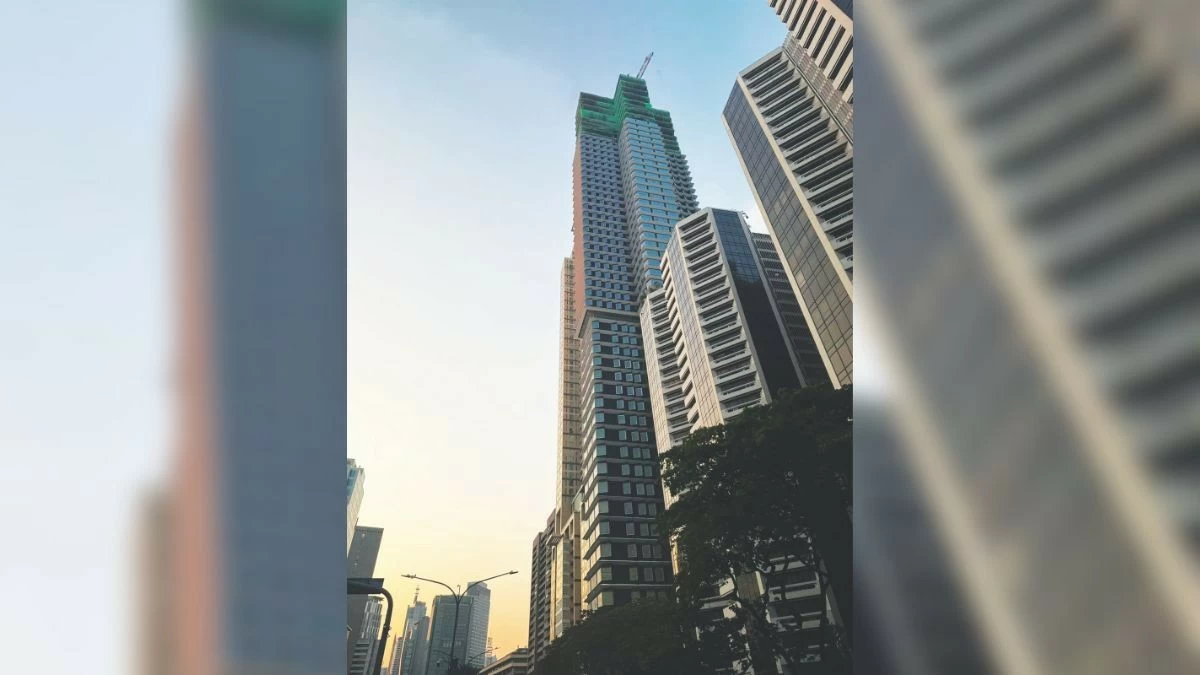
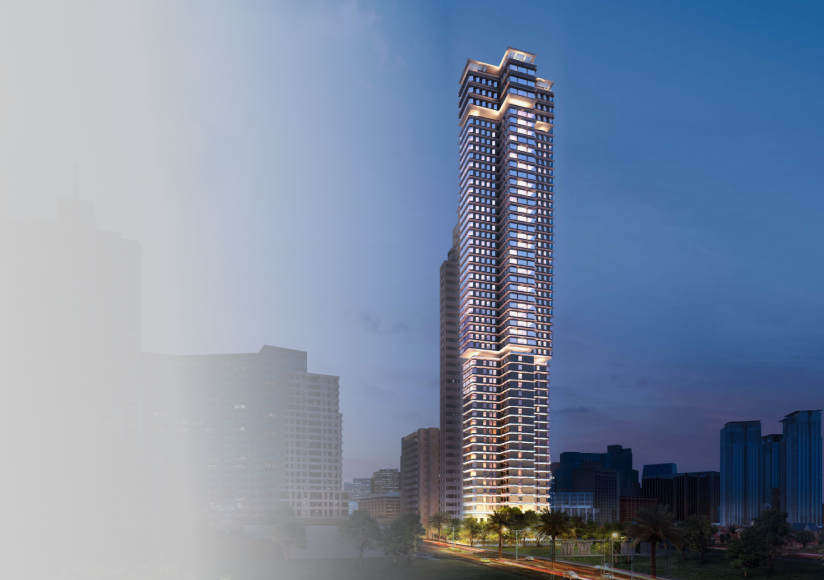
Designed by Foster Partners, The Estate Makati features a unique column-free system that allows residents to configure their space over time.
“It’s a rare site,” Ip said. “You move from a very urban condition to something quieter within a short distance. That contrast shaped the design from the beginning.”
For Ip, that duality became more than a site condition. It became a way of thinking about how people experience home and balancing access to the city with a sense of retreat.
“At Foster + Partners, all the projects we design are a reflection of how people live,” Ip said. “It needs to be built around you. It shouldn’t be something generic.”
That thinking carries through the building’s core principle of full adaptability, where homes are designed as spaces that can change over time.
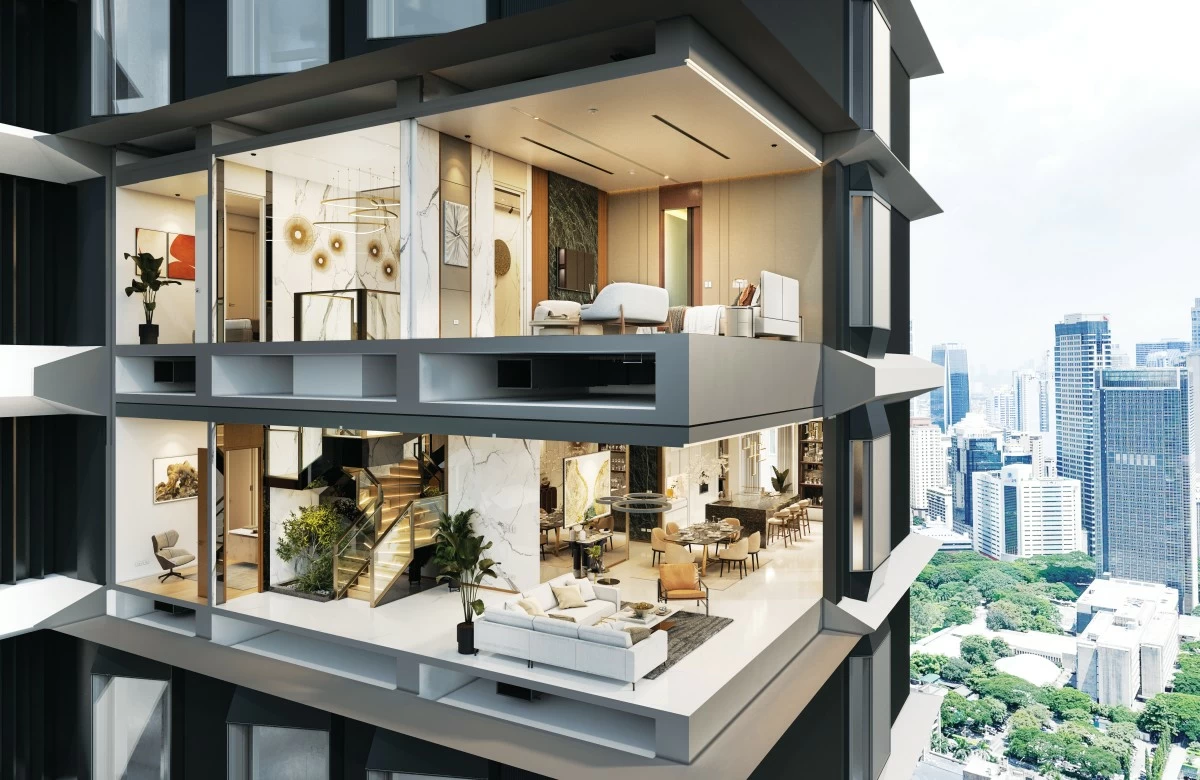
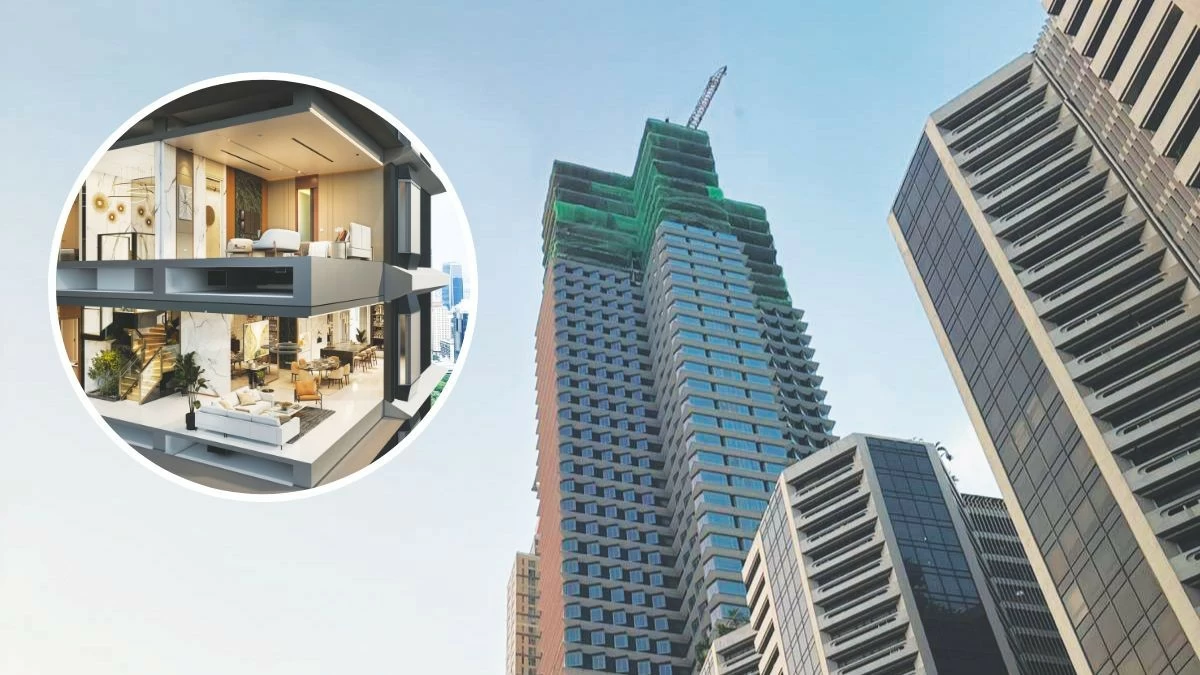
The double slab system allows rooms to expand or change function entirely, ensuring that reconfiguring a unit is a question of intent rather than structural intervention.
This idea takes shape through its pioneering double-slab system, where there’s a one-meter space between floors to conceal plumbing and electrical systems, allowing greater freedom for homeowners to reconfigure their space over time, whether adjusting layouts, expanding rooms, or adapting the home to new routines.
A column-free layout further supports this, enabling each home to function as a blank canvas rather than a fixed plan.
“The essence of the project is how much flexibility it gives residents to shape their space,” Ip said. “It’s all about possibility.”
The experience of the home extends beyond its interiors. In a tropical setting, comfort becomes a central part of the design, shaping how light, air, and views are experienced throughout the day.
Rather than treating the façade as a purely visual element, it is designed around how people will use the space. Deep horizontal fins provide shading, while operable windows allow controlled ventilation.
“We didn’t want the view to just be something you look at,” Ip said. “We wanted to bring people closer to it.”
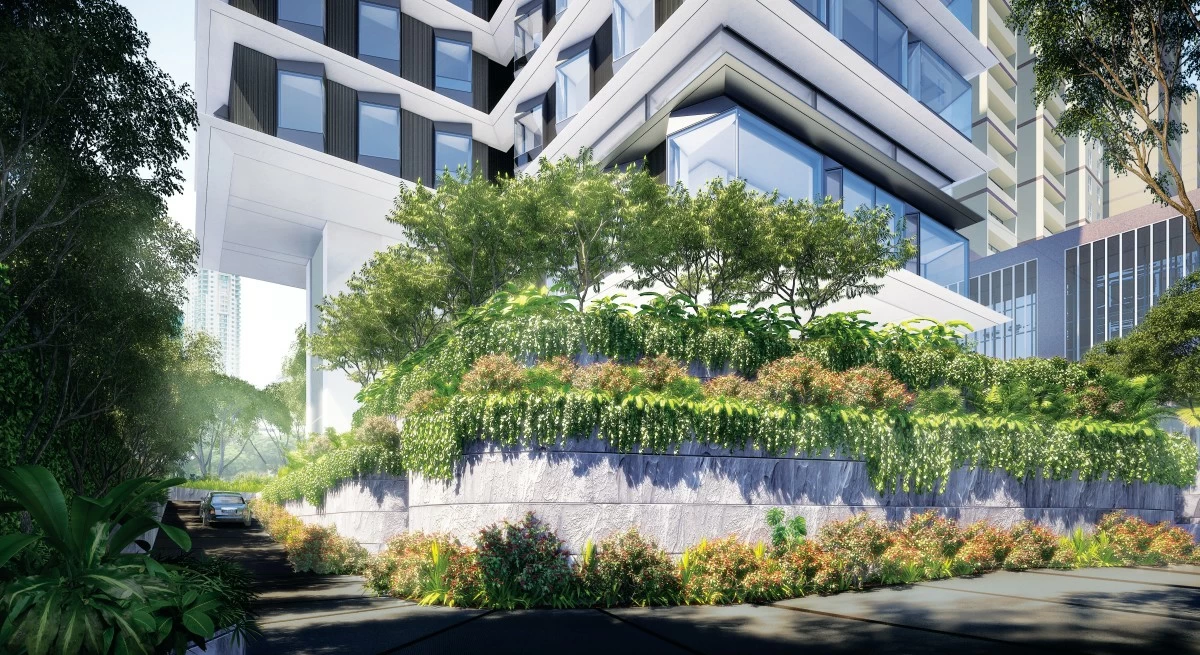
A private, landscaped approach creates a physical buffer from the surrounding streets, separating the development from the urban environment from the moment of arrival.
This thinking is expressed through bay windows that can be used as everyday living spaces, whether for reading, working, or simply pausing above the city.
The building’s cruciform layout deepens this connection. Each residence is positioned as a corner unit, maximizing views, natural light, and airflow. In a dense urban environment, this creates a stronger sense of openness and connection to the surroundings.
“Urban living is vibrant, but people also want a retreat,” Ip said.
Movement through the building is approached as a transition from city to home.
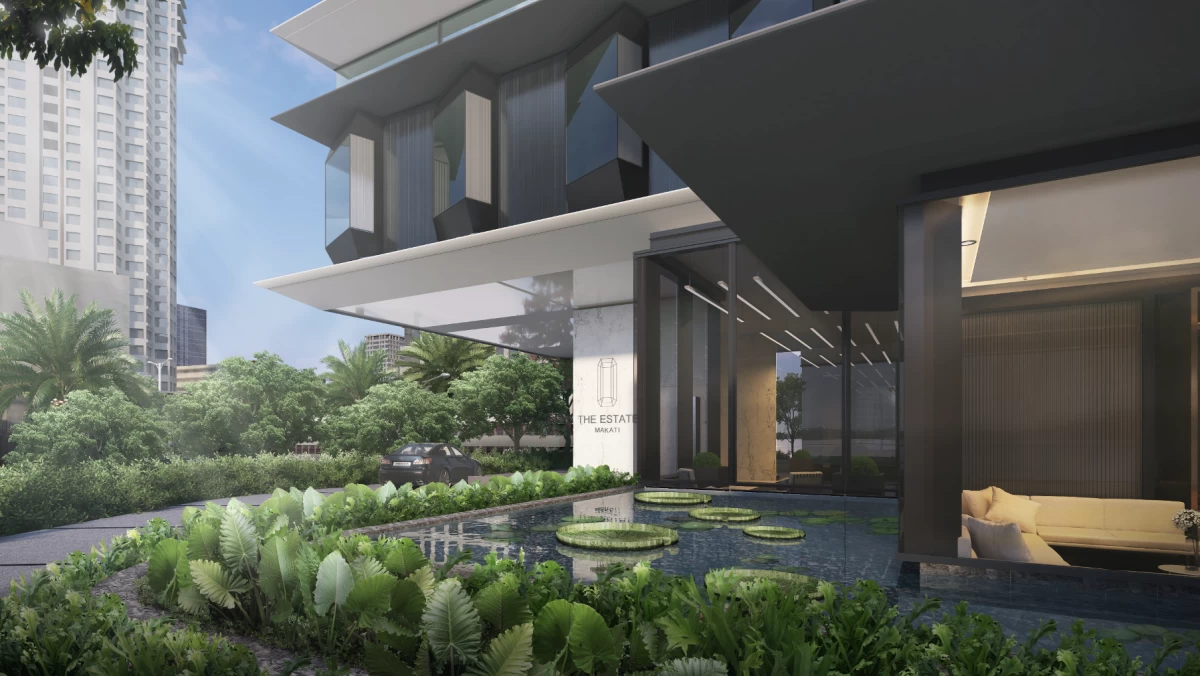
A landscaped arrival sequence introduces this shift, creating a quieter, more private environment from the moment residents enter. The ground level is organized as a series of spaces rather than a single lobby, reinforcing a more residential, less institutional feel.
The entrance is organized as a sequence of spaces, shifting the scale from civic to residential to establish a deliberate sense of quiet.
- Property and Living