
The Philippine architecture and design scene is evolving into an exciting new era, with a vibrant mix of international and local designers boldly transforming the ways we work, live and play
A quiet revolution is reshaping the Philippine design scene. Across the country, built environments are being reimagined to foster deeper connections between nature, community and cutting-edge aesthetics. From the contemporary art hub Kontempo in Makati to the sustainable beauty of Siargao’s Balai Dajao these innovative structures beautifully blend modern ingenuity with deep cultural heritage. Tatler has curated a collection of outstanding developments that demand your attention. Join us as we explore these future forms and the visionary minds shaping the next chapter of Philippine design.
1. Kontempo
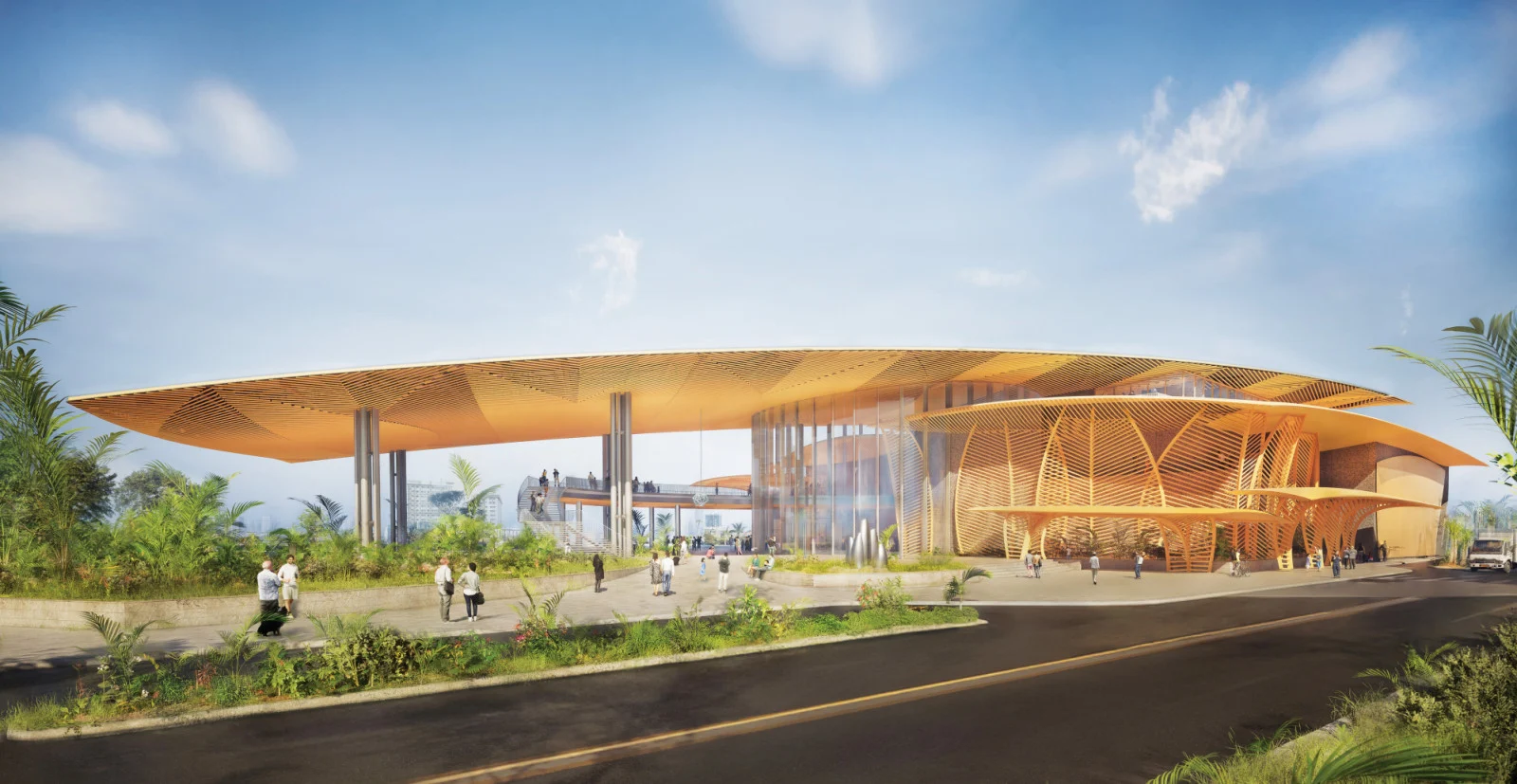
Imagine a space where a city’s vibrant pulse yields to the placidity of its main waterway, the Pasig River. This is the evocative premise behind Kontempo, the Philippines’ newest centre for contemporary art slated for completion by 2028. It will proudly stand on an expansive site steeped in history, the grounds
of the former Santa Ana Race Track. Kontempo is designed to redefine how we experience both art and community. Beyond the main building, the 2.5-hectare site will generously encompass 15,000 square metres of open green space dedicated to immersive art installations, lush gardens and public use, seamlessly integrating indoor and outdoor experiences.
Spearheading this 100,000-square-foot architectural marvel is Kulapat Yantrasast, the visionary founder and creative Director of WHY Architecture, in a dynamic collaboration with the esteemed Manila-based firm Lor Calma & Partners. Rather than imposing a rigid, monumental structure upon the landscape, the ingenious design champions permeability and civic openness.
At its conceptual core is a dramatic canopy, beautifully inspired by the morphology of palm fronds. Yantrasast perfectly encapsulates this romantic yet grounded ethos: “It is a place where nature and art meet, and where international culture converges with local creativity to produce something new.” He adds, “At its centre is a single, generous roof, beneath which life unfolds without boundary, inside and out, day and night.” Under this protective, porous roofscape—cleverly formed by lightweight steel “leaves” to provide shelter, filtered daylight and natural ventilation—the museum will house three primary gallery spaces. These spaces are enveloped in striking structures that abstract traditional Filipino craft, explicitly referencing indigenous weaving techniques that utilise abaca, piña, bamboo and palm fibres. These facade panels are not merely decorative flourishes; they serve as a highly functional climatic screen that mitigates heat gain whilst proudly expressing the material intelligence of Philippine architectural heritage.